exhibit

Visit Alice, Emmet and William at the Morgan

This slideshow requires JavaScript.

Four new and very different exhibits should entice you to visit the Morgan Library and Museum this summer, including Alice:150 Years of Wonderland, opening this Friday, June 26th. The exhibit will feature the original manuscript of Alice’s Adventures in Wonderland which, for the first time in three decades,  will travel from the British Library in London to New York. It will be joined by original drawings and letters, rare editions, vintage photographs, and fascinating objects—many never before exhibited. While this exhibit will surely draw the crowds, there are three other fascinating exhibitions that shouldn’t be missed.
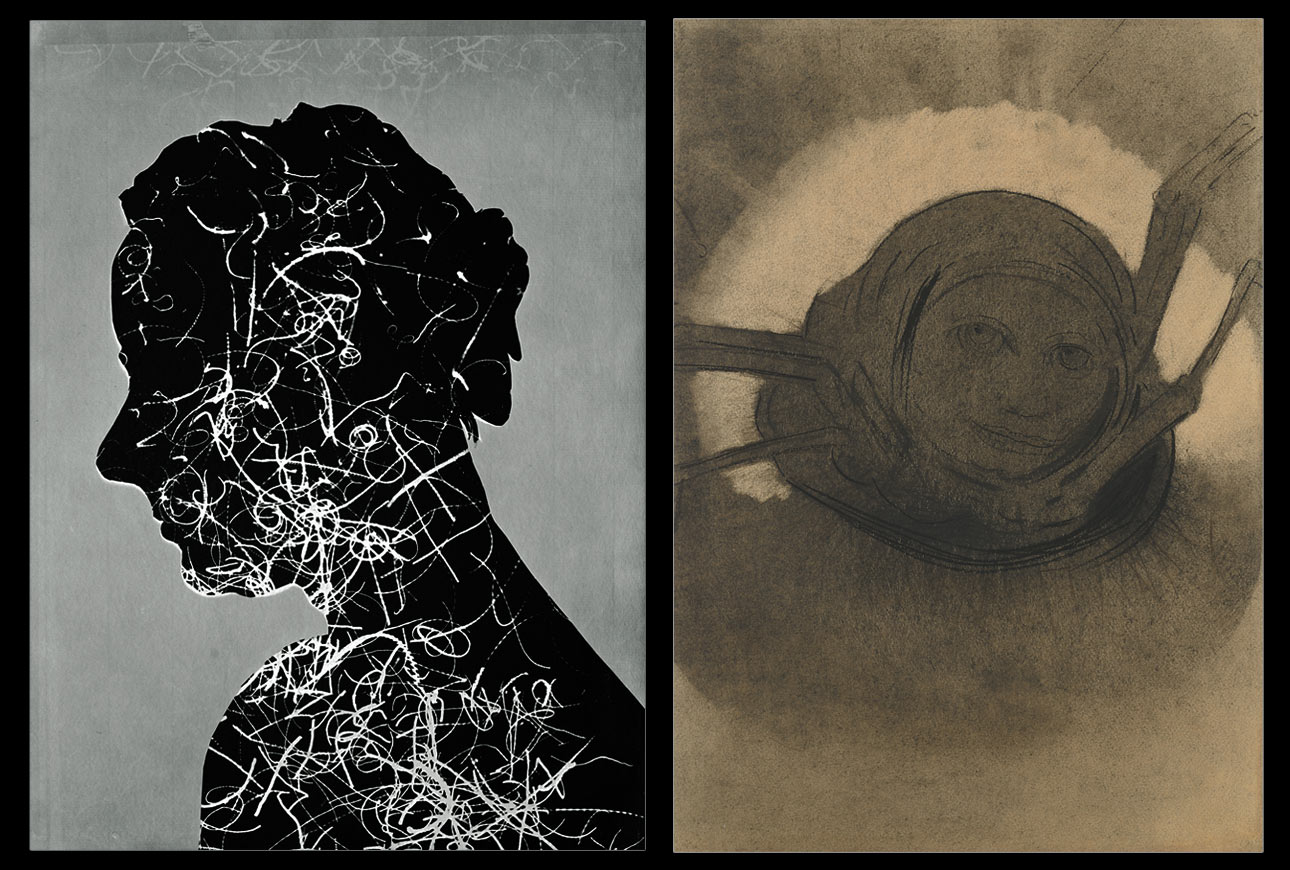
Left: Emmet Gowin (American, b. 1941), Edith in Panama, Flight Inside, 2003. Unique gold toned salt print on Twin Rocker handmade paper. Right: Odilon Redon (French, 1840-1916), The Spider, 1902. Charcoal and black chalk.

Left: Emmet Gowin (American, b. 1941), Edith in Panama, Flight Inside, 2003. Unique gold toned salt print on Twin Rocker handmade paper. Right: Odilon Redon (French, 1840-1916), The Spider, 1902. Charcoal and black chalk.

Hidden Likeness: Photographer Emmet Gowin at the Morgan is the most provocative, and requires a slow viewing to really appreciate its impact. For the exhibition, Gowin (b. 1941) has combined favorites from five decades of his work with objects drawn from the collections of the Morgan. Gowin’s photographs include portraits of his wife, Edith, and their extended family,  landscapes, and aerial views of sites shaped by modern-era catastrophes ranging from volcanic activity to nuclear testing. If you can, I’d recommend taking the free guided tour of the exhibit which is scheduled for Sundays, Wednesdays and Fridays at 2:00pm during July and August.  The exhibit will be on view until September 20th.

Sir Thomas Malory (fl. 1470) Thys noble and joyous book entitled le morte Darthur… Westminster: William Caxton, 31 July 1485

Sir Thomas Malory
(fl. 1470)
Thys noble and joyous book entitled le morte Darthur…
Westminster: William Caxton, 31 July 1485

For something completely different, stop in to see William Caxton and the Birth of English Printing.  This small exhibits celebrates the first books printed in English, beginning in 1474, by William Caxton. He was an English merchant and diplomat, who capitalized on the commercial opportunity offered by  print technology invented by Johann Gutenberg twenty years before. Caxton published key works of English literature, such as Chaucer and Malory, (on display) as well as short religious texts, many of which he translated from French or Latin. The Morgan has the third largest collection of Caxtons in the world. The exhibit is on view until September 25th.

Henri Matisse, Self-Portrait 1945 Conté crayon on wove paper.

Henri Matisse, Self-Portrait
1945
Conté crayon on wove paper.

For a more traditional art exhibit, visit Life Lines: Portrait Drawings From Durer To Picasso, on view through September 8th.  Life Lines includes self-portraits, like one by Henri Matisse, to portraits of family and friends, such as a portrait by Picasso of the actress Marie Derval.  There are formal portraits, commissioned by wealthy families as well as preparatory studies for paintings or sculptures.  If you not only enjoy viewing portraits, but also enjoy creating them, stop by the Morgan on Saturday, July 18th when you can sketch in the gallery.

Frida Kahlo at the NY Botanical Gardens

fk casa azul

Homage to the blue walls of Kahlo’s Casa Azul, Mexico at the NY Botanical Gardens

I confess – I’m not a huge fan of Frida Kahlo’s work. But I developed a new appreciation for her creative spirit after visiting the New York Botanical Gardens exhibit “Frida Kahlo: Art-Garden-Life.”

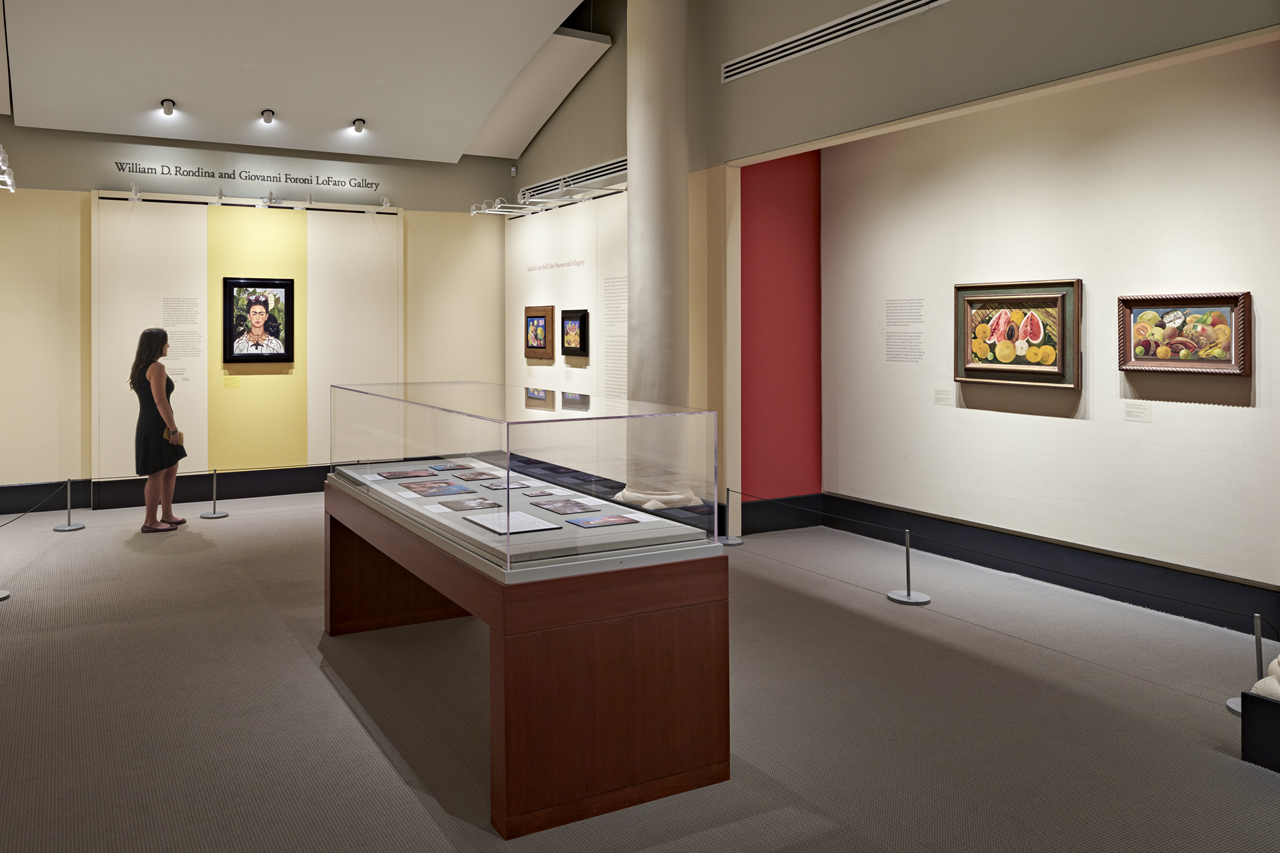
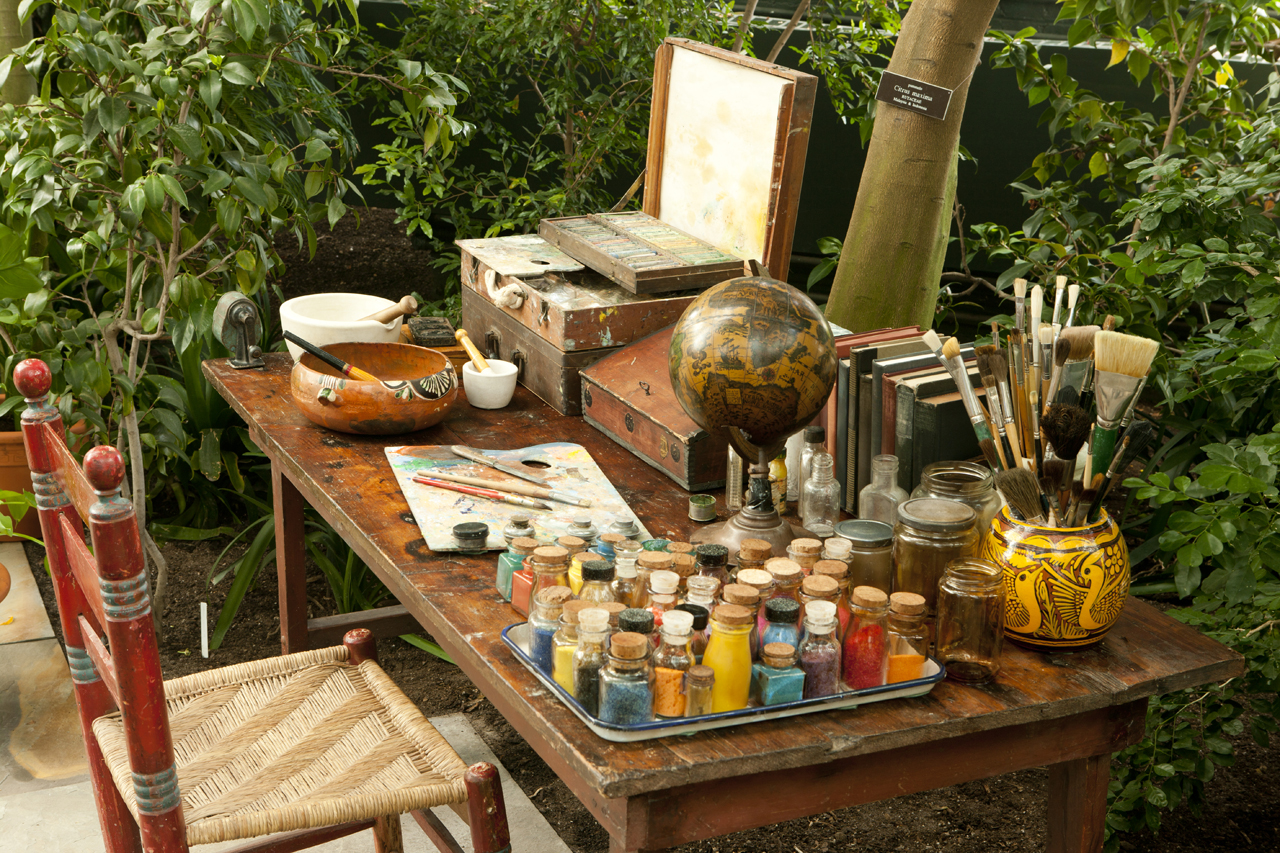
The exhibition is the first to examine Frida Kahlo’s connection to the beauty and variety of the natural world, as seen by her home and garden as well as her use of plant imagery in her artwork. The exhibit has two parts – the flora and fauna, and the paintings. The first can be found in the Enid A. Haupt Conservatory where Kahlo, and her husband Diego Rivera’s,  garden at the Casa Azul in Mexico City, are brought to life.

This slideshow requires JavaScript.

There you will see an array of beautiful flowers, cacti, trees and greens, as well as learn more about Kahlo’s connection to the natural world. Standing in the various rooms of the Conservatory makes you feel like you are in a living painting.

Reimaging Kahlo's studio overlooking her garden , NY Botanical Gardens

Kahlo’s in-garden studio, NY Botanical Gardens

The second part of the exhibit can be found in The LuEsther T. Mertz Library’s Art Gallery. Kahlo is perhaps best known for her self-portraits, but she also completed many portraits of others, still lifes, and personal scenes.

frida-gallery-2

Fourteen of her works are on display in the Garden’s Art Gallery. According to NYBG, the paintings were selected for their use of complex and detailed plant imagery and come from museums and private collections in Mexico and the United States.

The exhibit will be open through November 1st. It pays to make a day trip out of your visit because, aside from the exhibit, you can enjoy just walkng around the Gardens. If you go on the weekend, I’d recommend going to the art exhibit towards the end of the day. It’s a small room and so crowd control is necessary. Waiting time to get in during the day can go up to an hour. It’s much faster after 3:00pm.

Al Hirschfeld at the New York Historical Society

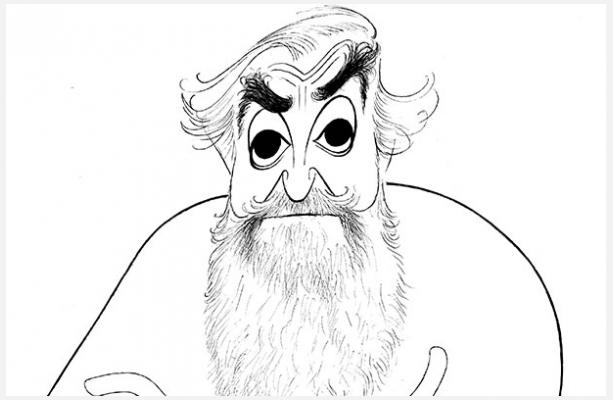
Al Hirschfield, Self Portrait

Al Hirschfeld, Self Portrait

A Sunday morning pleasure used to be trying to find the “Ninas” in Al Hirschfeld’s caricatures which appeared in the Sunday New York Times “Arts & Leisures” section. As most people knew, Nina was Hirschfeld’s daughter. But what I learned at the New York Historical Society’s exhibit, “The Hirschfeld Century: The Art of Al Hirschfeld,” was that Hirschfeld never intended to make it a permanent feature of his drawings. He did it for the first few months after Nina’s birth; meant for the amusement of his friends. But when he stopped, people protested; so “Nina” returned and stayed part of the Sunday drawings.

Al Hirschfeld, 2000 Academy Award Nominees for Best Actor and Best Actress, 2001.Colored gels over pen and ink.

Al Hirschfeld, 2000 Academy Award Nominees for Best Actor and Best Actress, 2001.Colored gels over pen and ink.

The exhibition has over 100 original works, with a special emphasis on the New York Times—where Hirschfeld was a contributor for over seven decades. Hirschfeld, who died in 2003 at the age of 100 years,  was known by many as “the Line King,” As you walk through the exhibit, and look closely at his work, you can really appreciate the power of his lines. The exhibit contains classic portraits of Charlie Chaplin, Carol Channing, Ella Fitzgerald, Jane Fonda and Ringo Starr, as well as cast drawings from theatrical productions of Fiddler on the Roof, West Side Story, and The Glass Menagerie.

If you go, don’t missing seeing the short video of an interview with Hirschfeld. Not only is it interesting to hear him talk about his work, but you also get to see how he creates it.

The exhibit is on view through October 12, 2015.

2015 Museum Mile Festival

museummille_logo_37

This year’s Museum Mile Festival takes place on Tuesday, June 9th from 6-9:00pm. Nine museums from 82nd -105th Street are open late and free to the public. Fifth Avenue will closed to traffic; there’s street entertainment; and it’s a great opportunity to get a taste of art from different institutions. But beware – there can be long lines to get into some of the museums.

Thomas Hart Benton, City Activities With Dancehall

Thomas Hart Benton, City Activities With Dancehall

One of the most popular museums on Museum Mile is the Metropolitan Museum of Art. I’d recommend entering the museum at the 81st Street entrance — where school groups are directed — it will probably be less crowded. Only part of the museum will be open that night; primarily the new big exhibits like China Through the Looking Glass. These will be pretty crowded so if you can, seek out some smaller exhibits or work from the permanent collection. For example, the Met just reinstalled the ten-panel mural,  America Today, by Thomas Hart Benton.  Benton  painted this mural for New York’s New School for Social Research to hang in the school’s boardroom. It  depicts a sweeping panorama of American life throughout the 1920s. It was on view as a special exhibition but now is permanently installed in gallery 909 in the Modern Wing of the museum.


Making Design, Cooper-Hewitt museum

Making Design, Cooper-Hewitt museum

It’s also a good night to visit a museum that you don’t normally go to. Try Cooper-Hewitt Museum  which wasn’t open when last year’s Museum Mile event took place. One current exhibition to see is  Making Design. It’s the first in a number of exhibitions devoted to showcasing Cooper Hewitt’s extensive collection. It brings together some 360 objects, including furniture, lighting fixtures, tableware, clothing, jewelry, books, and posters, providing an overview of five key elements of design: line, form, texture, pattern, and color (red, for this initial installation).

Picasso:Femmes

picasso1

Pablo Picasso on view at David Benrimon Fine Art LLC

I just returned from Barcelona where, among many art museums, I visited The Museu Picasso.  Its focus is on Picasso’s formative years and is home to  4,251 works that make up their permanent collection. The museum also has special exhibitions. I saw a wonderful one looking at the relationship between Picasso and Salvador Dali.

When I returned, I was delighted to learn that David Benrimon Fine Art LLC had a Picasso exhibition highlighting and celebrating some of the women who  inspired Picasso’s life’s work. While Picasso had relationships with many women, there were eight, according to the gallery, who had a critical influence on his work: Fernande Olivier, Eva Gouel, Gaby Lespinasse, Olga Khokhlova, Marie- Thérèse, Dora Maar, Françoise Gilot and Jacqueline Roque.  Picasso: Femmes includes portraits such as the 1936 painting of Marie-Thérèse, as a young adolescent. There are three different portrayals of Jacqueline; his muse and second wife for the last nineteen years of his life.

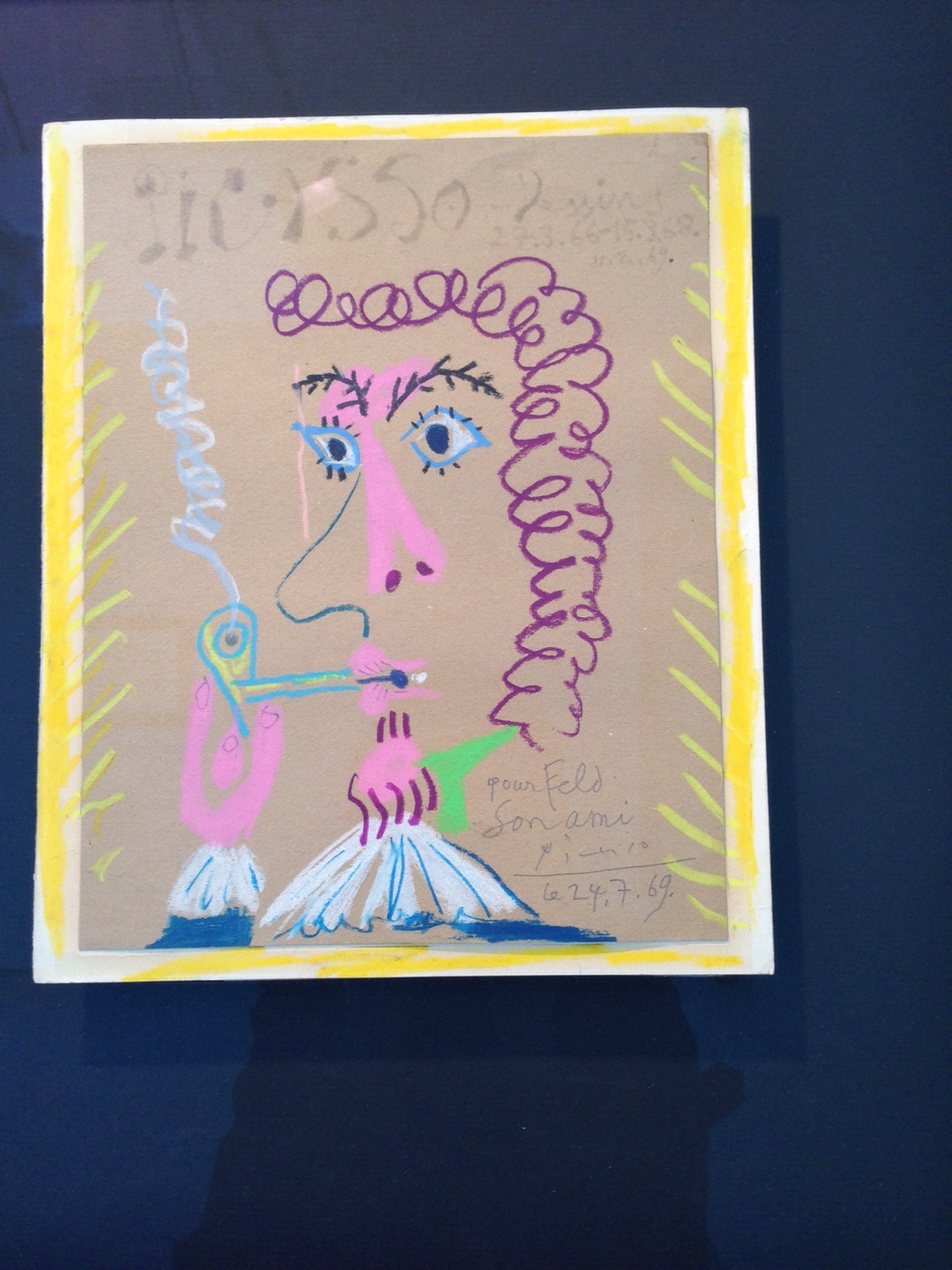
Pablo Picasso, Fumeur, 1969, Crayon and felt tip pen on brown paper mounted on paper

Pablo Picasso, Fumeur, 1969, Crayon and felt tip pen on brown paper mounted on paper

There are also several works on paper and a number of portraits Picasso did using “aquatint,”a process of etching tonal values, which can create a look like ink or watercolor washes. One amusing piece was not within the “femmes” theme but part of a series of portraits Picasso did of smokers. This crayon and felt tip pen portrait looked like something a school child would draw. Nonetheless, it had a distinct Picasso feel to it. If you’re a Picasso fan then this is a show worth visiting. It will be on view through June 30th at the gallery in the Crown Building (730 Fifth).

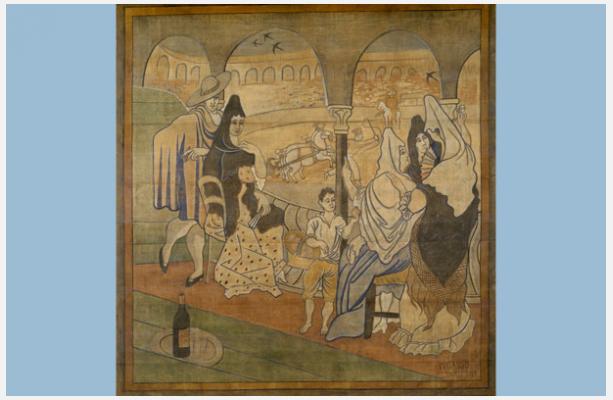
Pablo Picasso, Stage Curtain for the Ballet "Le Tricorne," 1919

Pablo Picasso, Stage Curtain for the Ballet “Le Tricorne,” 1919

You might also want to stop by the New York Historical Society to see the newly acquired, and conserved, stage curtain, “Le Tricorne.”   For more than half a century it has hung in the hallway of the Four Seasons Restaurant, in the landmarked Seagram Building. Picasso painted the curtain for the two-act ballet The Three-Cornered Hat (El sombrero de tres picos or Le tricorne). The ballet and curtain were commissioned by Sergei Diaghilev for his Paris-based Ballets Russes. It opens May 29th and wil be on permanent view at NYHS.

The Drawing Center: Contemporary and Historical Art in SoHO

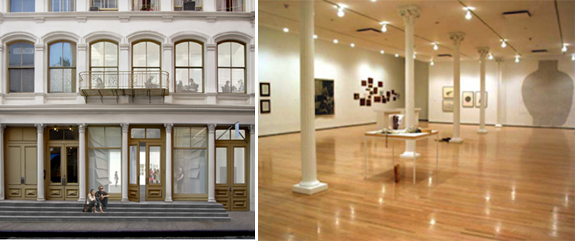
Facade_Home_MAIN1Located at the southern end of SoHo, The Drawing Center is a non-profit gallery/museum devoted to the medium of drawing — both historical and contemporary.  Since its founding in 1977, The Drawing Center has spotlighted drawing connected with science, literature, architecture and political movements. There are also lectures, gallery talks, family workshops and literary programs that enhance the exhibitions. Like the Chelsea galleries, The Drawing Center gives you an opportunity to see the work from both new artists and older masters in an intimate setting.

There are two very different shows on view at The Drawing Center right now — both worth visiting. In the main gallery is “Portraits from the École des Beaux-Arts Paris.” The exhibition explores four hundred years of portrait drawings, emphasizing work from live models. Forty portraits have been chosen from the Beaux-Arts de Paris’ collection based on “diverse criteria such as the male and female gestures, caricature, frontal gaze, social class, and profession of the model.” The portraits range from seventeenth-century to the present and include never-before-exhibited drawings by nineteenth-century artists Jean-Auguste-Dominique Ingres and Charles Garnier to the work of modern and contemporary artists like Henri Matisse and Georg Baselitz.

In the lower level gallery is a completely different kind of drawing exhibit – “Natalie Frank: The Brothers Grimm.”  Frank, a 35-year-old, contemporary artist, has brought to life the “unsanitized” versions of the fairy tales of Jacob and Wilhelm Grimm. Using bold colors in gouache and pastel, Frank focuses on the dynamics between flesh and spirit. According to the artist, she is exploring, “the parallel poles of longing and desire but also disgust and fascination that constitute humanity.”  From afar, the scenes are both alluring and grotesque. Up close, you can appreciate the richness in detail and will be drawn in by the energy emanating from the colors.

Both shows will be on view through June 28th.

A Curious Blindness: Artists Responding To Race and Identity Politics

a curious blindness, at Columbia University’s Miriam and Ira D. Wallach Art Gallery, brings together the work of eighteen early- to mid-career artists. The thematic focus is their interpretations  of how people of color are treated and represented in today’s world.  The title of the exhibition,  “a curious blindness,” comes  from the poem, People, by Jean Toomer, a writer from the Harlem Renaissance who struggled with his mixed-race heritage.

One of the first pieces you see when entering the gallery is a giant “whitening” tube next to a small video screen. This is the work of Baltimore artist Nora Howell. In her performance and installation she created a “public intervention that animates her sculptures while drawing attention to her own relationship to whiteness as well as inciting a conversation about whitening as a social contract,” according to the exhibition catalog.

This slideshow requires JavaScript.

Two large galleries and three smaller rooms are populated with videos,  performance art, photography, collage,  paintings and sculpture. The pieces are as different as the artists who created them but are all thought-provoking and engaging.

The exhibit is the the third presentation of MODA Curates. This is an annual opportunity offered by The Wallach Art Gallery and the MA in Modern Art: Critical and Curatorial Studies Program (MODA) for outstanding curatorial proposals related to students’ theses. a curious blindness is curated by Vivian Chui, Tara Kuruvilla, and Doris Zhao and will be on view until June 13.

Thomas Nozkowski: Colorful and Intimate Abstract Art


Thomas Nozkowski, Untitled (9-32), oil on linen panel

Thomas Nozkowski, Untitled (9-32), oil on linen panel

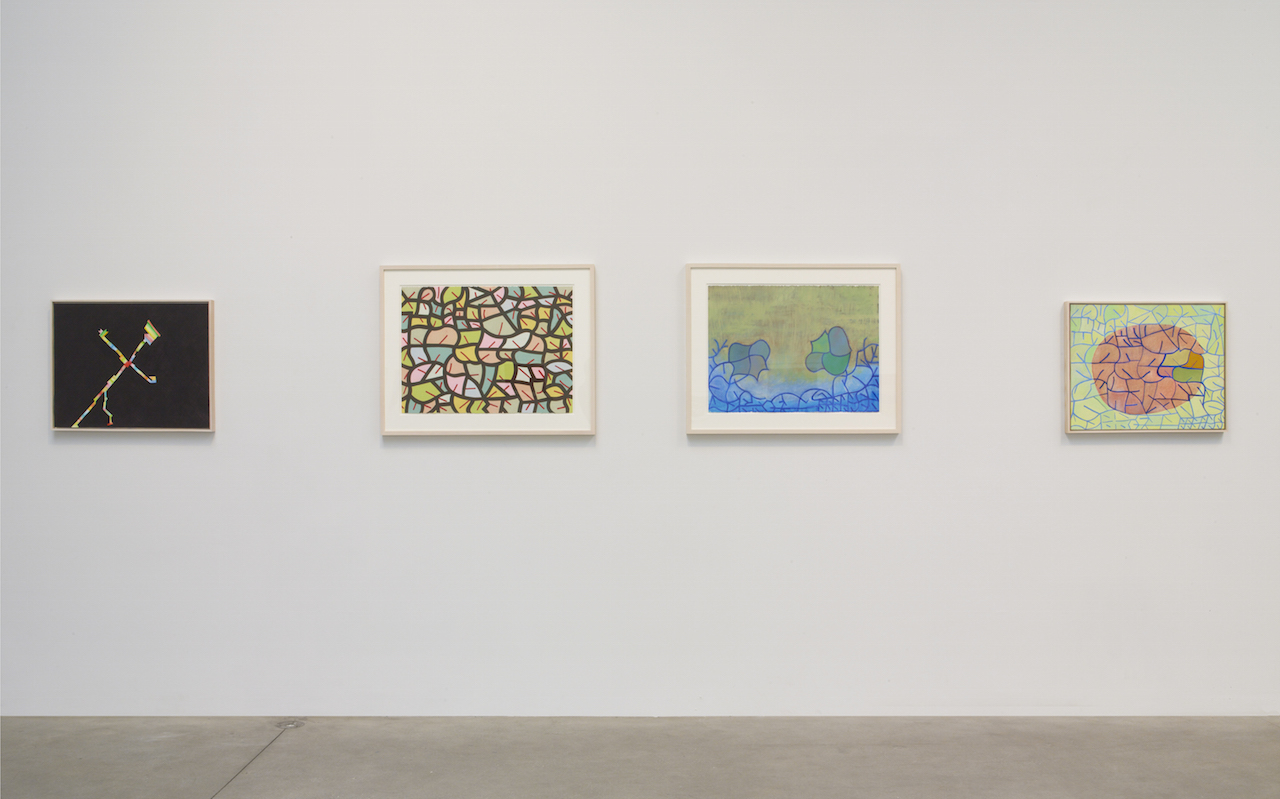
I was recently struck by a Matisse-like painting used to promote a new exhibition at the The Pace Gallery. It turned out to be by American born Thomas Nozkowski. Since the 1970’s, Nozkowski has produced abstract paintings and drawings in which he experiments with a form, color, or gesture, and then reworks it repeatedly over time. My response to Nozokowski’s painting was well-founded. In a recent interview with Artspace, Nozkowski commented:

“There’s a painting in this show with some Matissean curvy shapes painted in a Matisse blue—that’s not an accident, it was a decision to draw upon that blue for that particular move.”

More than 60 paintings and drawings, most of them created in the last year, are on view at the gallery. One of the interesting aspects of Nozkowski’s art is the fact that he works on 16 x 20 inch canvases. In his Artspace interview he explained why he chose that size:

“…I decided I would paint at a size that was scaled to my friends’ apartments, that could hang in a three-room walkup tenement on 7thStreet. …Once I made that decision I discovered how easy it was to put an idea in the world, look at it, and then wipe it off and do something else if it’s no good. Suddenly, I could go through hundreds of ideas in the life of a painting. When I did large paintings like I did in art school, it could take days to change a color.”

Installation View, "Thomas Nozkowski" Pace Gallery

Installation View, “Thomas Nozkowski” Pace Gallery

The exhibit will be on view through April 25th. If you are going down to Chelsea, be sure to also see:

“Alice Neel Drawings and Watercolors 1927-1978 at David Zwirner, 537 West 20th Street, on view through 4/18.

In the Studio: Paintings” at Gagosian, 522 West 21st, on view through  4/18.

Roz Chast: Drawings, Textiles and Dyed Eggs

Roz Chast Library Cover, published Oct. 18, 2010 watercolor and ink on paper 10 x 8 inches

Roz Chast
Library Cover, published Oct. 18, 2010
watercolor and ink on paper
10 x 8 inches

If you read the  New Yorker then you know the wit and wisdom of Roz Chast’s wonderful cartoons.  Something More Pleasant, at the Danese/Corey Gallery, gives you an opportunity to see Chast’s work up close, and appreciate them not only for their humor but also for their artistry.

The exhibition is a mix of Chast’s cartoons and New Yorker covers, as well as textiles and pysanka (dyed eggs) created with the same humor and flair.

This slideshow requires JavaScript.

The show will be on view through April 18th. And, if you are a fan of Roz Chast, you can see more of her work at the Norman Rockwell Museum (Stockbridge, MA) this summer.

Spring Art Events in NYC


There’s always new art to see in New York City. It’s good to plan ahead so you don’t miss out. This spring there are some great shows opening at the major museums: the 2015 Costume Institute extravaganza at the Metropolitan Museum of Art, “China Through the Looking Glass,” opening May 7th; Basquiat: The Unknown Notebooks at the Brooklyn Museum opening April 3rd;or Yoko Ono: One Woman Show, 1960–1971 at MoMA, opening May 17th. And then, there’s the re-opening of the Whitney on May 1st in it’s new location on Gansevoort Street, off the Highline.

But there are also exciting art events and openings happening where you may not be looking. For example:

Russian Modernism: Cross-Currents in German and Russian Art, 1907-1917 , Neue Galerie, 5/14-8/31

The Hirschfeld Century: The Art of Al Hirschfeld at the New York Historical Society, 5/22-10/12

Life Lines: Portrait Drawing from Dürer to Picasso at the Morgan Library and Museum, 6/12 – 9/8

Two art fairs that are worth checking out are:

Spring Masters New York at the Park Ave Armory, 5/8-12 – the fair will feature leading international galleries from the U.S. and Europe, exhibiting art and design from antiquity through the 21st century.

Frieze New York Art Fair, Randall’s Island  5/14-17 -Frieze New York is one of the few fairs to focus on contemporary art and living artists. The exhibiting galleries represent  artists working today from around the globe.