Art

Romare Bearden Exhibit and Other Art at Columbia University

Romare Beardon, "Poseiden. The Sea God-Enemy of Odysseus" (1977);  collage of various papers, with foil, paint, ink and graphite on fiberboard)

Romare Beardon, “Poseiden. The Sea God-Enemy of Odysseus” (1977); collage of various papers, with foil, paint, ink and graphite on fiberboard

“Romare Bearden: A Black Odyssey” is an exciting new exhibit on view at the Wallach Art Gallery at Columbia University. Based on Homer’s poem, Bearden created a series of collages and watercolors that bring to life Odysseus’s battles, triumphs, temptations and sacrifices that he experienced in his 10-year journey home to Ithaca.

Bearden’s interpretations “bridge classical mythology and African American culture,” notes the exhibition catalog. “Bearden saw Harlem in Homer’s Odyssey, and Odysseus in Harlem.”

Matisse illustration from 1935 edition of  James Joyce's Ulysses

Matisse illustration from 1935 edition of James Joyce’s Ulysses

Also on view at the exhibit is a 1935 special edition of James Joyce’s Ulysses from Columbia’s Rare Book and Manuscript Library. The book contains reproductions of 20 preliminary drawings and six etchings by Henri Matisse, who based his illustrations on six episodes in Homer’s Odyssey. This was particularly interesting to see following on the heels of the MoMA “Matisse Cutouts” exhibit which closed recently. Watching Bearden create his collages in a film available at the exhibit is reminiscent of a similar film shown at the “Cutouts” exhibition; both artists drawing with scissors.


This slideshow requires JavaScript.

The Wallach Art Gallery is just one location at Columbia University to see art work. It’s also worth visiting Columbia University for  the wide range of sculptures situated throughout the Morningside campus, including works by Auguste Rodin, Daniel Chester French, and Henry Moore. The outdoor sculptures are part of approximately 10,000 works of art, overseen by Columbia’s Art Properties department. Donated to the University over the past two centuries, the art can be found in public spaces and also held in storage. They include:

  • Nearly 2,000 paintings, including hundreds of portraits of Columbia administrators and faculty since the eighteenth century, and the largest repository of paintings by Florine Stettheimer (1871-1944)
  • About 900 works of fine art photography from daguerreotypes to Andy Warhol polaroids
  • The Sackler Collection of over 2,000 Asian art works, including Buddhist sculpture in stone, bronze, and polychrome wood from India, China, and Japan
  • Hundreds of works on paper (drawings, watercolors, prints) and decorative arts (ceramics, tapestries, furniture) from around the globe

Roberto C. Ferrari, an art historian and librarian, was hired in 2013 as curator of Art Properties. He and his team are developing an online inventory and exploring social media options to make more of the collection digitally accessible not only to the Columbia community, but to art lovers worldwide.

For now, be sure to visit the “Romare Bearden: A Black Odyssey” which will be on view through March 14th. Then, when the weather warms up, stroll through the campus to see the collection of outdoor sculptures.
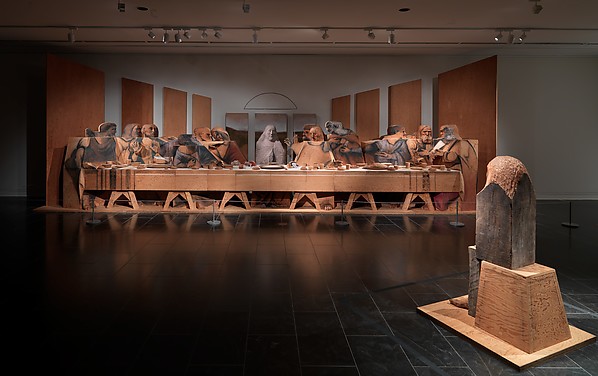
Marisol’s “Self-Portrait Looking at The Last Supper”

marisol

Though I’m at the Metropolitan Museum of Art every week, I somehow missed seeing an incredible sculptural installation by the artist, Marisol.  She is best known for her large figural sculptures, which address a variety of subjects. The piece at the Met is entitled, “Self Portrait Looking at the Last Supper,” and is based on Leonardo Da Vinci’s painting of the same name. At 30-feet long, it is the same length as Da Vinci’s fresco.

Seated across the room from The Last Supper, there is a single wooden figure representing the artist herself . Her presence is meant to underscore that art is about looking, evaluating, and reinventing what one sees, according to the exhibition notes.

You can find “Self Portrait Looking at the Last Supper” all on it’s own in gallery 909 in the first floor Modern and Contemporary Paintings section. Exhibiting it this way allows the viewer to really appreciate the details of the construction and feel the impact of the piece.

“Self Portrait Looking at the Last Supper” was supposed to close several weeks ago but will be on view at least through March. It’s worth a visit to the Met just to see it but certainly stop by if you’re at the Met for other reasons.


Art in the Comfort of Your Home

Don’t let the predicted NYC “Blizzard 2015” deter you from seeing art. Most museums now have their collections online and with the Google Art Project you can view collections from around the world; create your own personalized gallery; or find artists that you like.

There are also a variety of films and talks you can watch that provide an in-depth look at an artist — their work and their process. Here are some to consider that I’ve really enjoyed.

Movies 

Chuck Close: A Portrait in Progress (You Tube) — documentary that explores Close’s inspiring life story while showcasing his creative and exciting portraits.

Gerhard Richter Painting (Netflix streaming) —  Richter’s creative process juxtaposed with intimate conversations and rare archival material. You can watch Richter create a series of large-scale abstract canvasses, using fat brushes and a large squeegee to apply (and then scrape off) layer after layer of paint.

Waste Land: Vik Muniz (DVD) — Filmed at the world’s largest garbage dump, Jardim Gramacho, located on the outskirts of Rio de Janeiro. Muniz  photographs a group of “catadores”—self-designated pickers of recyclable materials. Muniz’s initial objective was to “paint” the catadores with garbage. In the end, he partners with them to recreate photographic images of themselves out of the collected garbage.

David Hockney: A Bigger Picture (Amazon Prime Instant Video) — Filmed over 3 years it captures David Hockney’s return from California to his native Yorkshire. H is shown painting outside through the seasons and in all weathers.

Ai Wewei: Never Sorry  (Netflix streaming)– a portrait of China’s most famous international artist, and its most outspoken domestic critic.  Ai expresses himself and organizes people through art and social media. The movie shows his work and how the Chinese authorities have shut down his blog, beat him up, bulldozed his newly built studio, and held him in secret detention.

NYC-Arts

NYC-ARTS is a program which airs weekly on a local PBS station — Channel 13 or 21 — but can be viewed online as well. Many of the programs focus on exhibits at local museums and feature talks by curators. A recent program featured Paula Zahn in conversation with Emily Braun and Rebecca Rabinow, the curators of the exhibition “Cubism: The Leonard A. Lauder Collection,” which is on view at The Metropolitan Museum of Art.

TED Talks

TED is a nonprofit organization devoted to spreading ideas, usually in the form of short, talks (18 minutes or less). TED began in 1984 as a conference where Technology, Entertainment and Design converged, and today covers almost all topics — from science to business to global issues — in more than 100 languages.  You can search “art” topics on the TED Talks website and find a wide range of talks. I especially enjoyed “Art with wire, sugar, chocolate and string,” a talk by Brazilian artist, Vik Muniz.

Do you have a favorite movie, program or talk about or with an artist? Share the link and I’ll add it to the list.

Being There Without Being There: Art Exhibitions on Screen

If you live in New York, then you should go see the Matisse Cut-Outs at MoMA. But if you can’t make it to the museum, you can go to the movies to see it, and four other exciting exhibits from museums around the world.

Fathom Events, in association with Arts Alliance and Seventh Art Productions, is bringing five art exhibitions to select U.S. cinemas with “Exhibitions on Screen.”   The first film, “Matisse from MoMA and Tate Modern,” begins on January 13th and is playing locally at Union Square Stadium 14, Empire 25, and Kips Bay 15. The other four exhibitions to be screened are:

Rembrandt from the National Gallery London & Rijksmuseum Amsterdam

Vincent van Gogh – A New Way of Seeing from the Van Gogh Museum in Amsterdam

Girl with a Pearl Earring and Other Treasures from the Mauritshuis in the Hague

The Impressionists from the Musée de Luxembourg Paris, National Gallery London, and the Philadelphia Museum of Art

(Thanks RDK for the heads-up)


Finding Art in a House of Books

exterior_sasb2_0

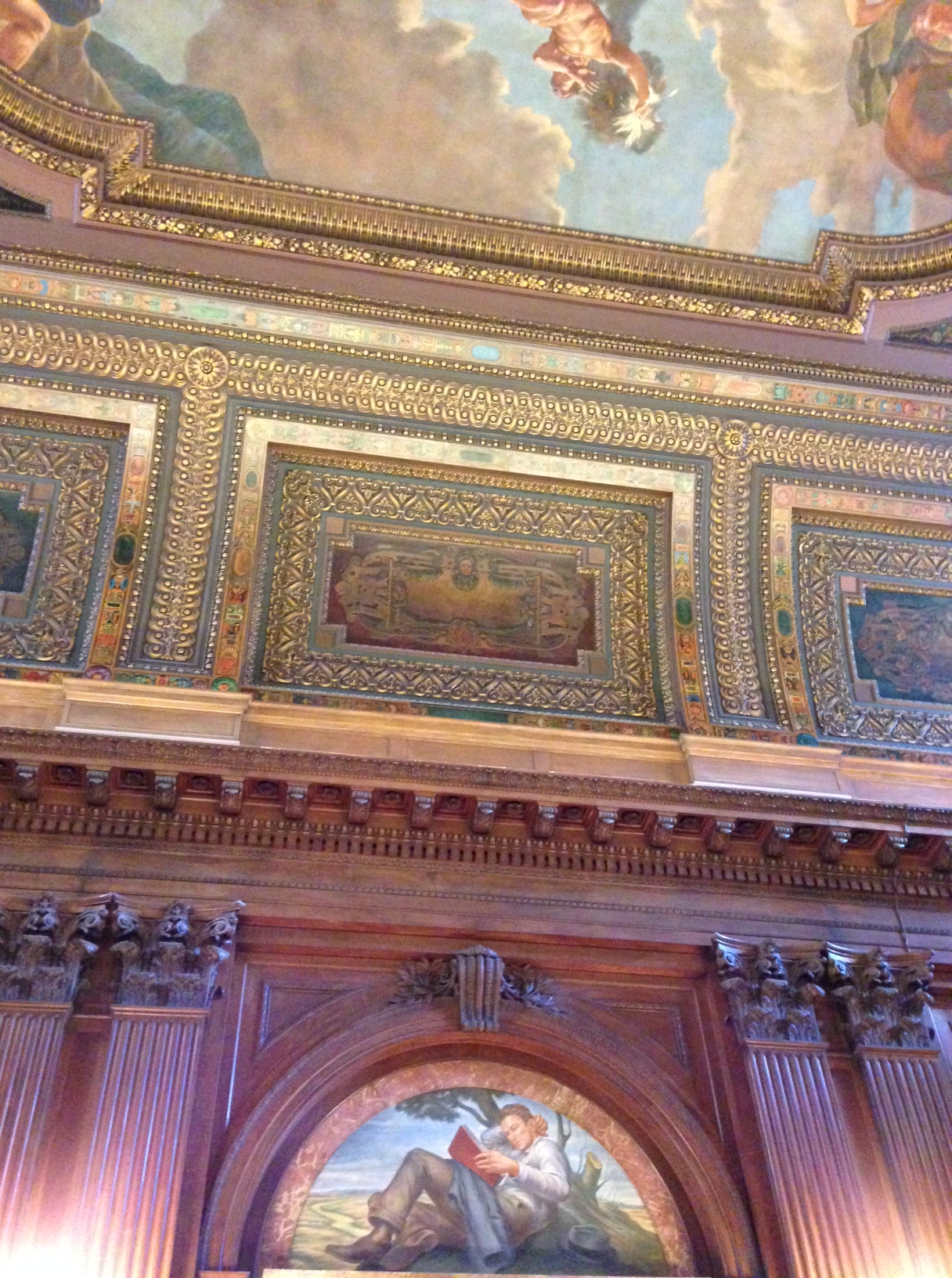
More than one million books were in place when the New York Public Library was officially dedicated on May 23, 1911. The Beaux-Arts designed building was the largest marble structure ever attempted in the United States, according to the NYPL’s website. Today’s main branch, with its imposing lions keeping watch, has become not only a place for reading and research, but a tourist destination as well. However, it’s not often thought of as a place to view art.

The McGraw Rotunda

The McGraw Rotunda

To begin with, there is the Stephen A. Schwarzman Building itself. It was named in 2008 after the Wall Street financier Stephen A. Schwarzman who agreed to jump-start a $1 billion expansion of the library system with a guaranteed $100 million of his own. Besides the majestic outside, the ceilings, hallways and reading rooms are beautiful as well. Start with the third floor McGraw Rotunda where you will find murals by Edward Laning depicting the history of the written word.

Also on the third floor is the Edna Barnes Salomon Room, named in honor of the wife of former NYPL Chairman of the Board Richard Salomon. Though the room is now the home of a new wireless Internet reading and study room,  it contains some of the building’s most important paintings. Many of the artworks belonged to the families of James Lenox and John Jacob Astor and include portraits by Reynolds, Raeburn, Romney, Trumball and Stuart. In addition, to the permanent art found in the library, there are always interesting exhibits .

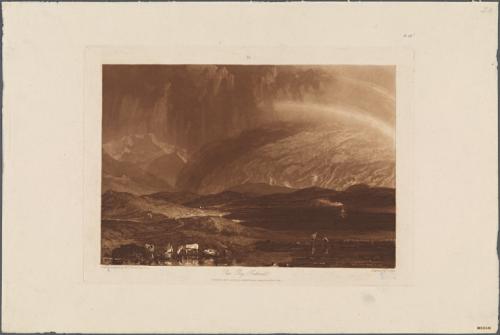
Print from "Sublime, The Prints of  J.M.W. Turner and Thomas Moran

Print from “Sublime, The Prints of J.M.W. Turner and Thomas Moran

Sublime: The Prints of J.M. W. Turner and Thomas Moran can be found along the hallway on the third floor. Between 1807-1819 Turner published his Liber Studiorum (Book of Studies). It’s a series of landscapes evoking a sense of the “Sublime,” a term philosopher Edmund Burke defined as “whatever is fitted…to excite ideas of pain or danger.” American painter and printmaker, Thomas Moran was inspired by Turner’s work. Shown at different ends of the hall, the exhibition provides an interesting comparison between the “British and American artists’ often complementary and sometimes divergent views of nature,” states the exhibition catalog.

Image from "Public Eye"

Image from “Public Eye”

Public Eye: 175 Years of Sharing Photography can be found on the first floor and is drawn entirely from the Library’s collections. It explores various ways photography has been shared and made public from 1839 to the present. More than 50 photographers are represented including Ed Ruscha, Gary Winogrand, and Thomas Struth. There’s  an interactive piece representing digital traces of life in a twenty-first century city, and a  stereogranimater which allows you to view, create, and share 3D images from the stereograph collections of The New York Public Library and Boston Public Library.

There are many other smaller exhibits on view. Check the library’s website for the full listing

Textile Exhibition: The Consequences of Hate Speech (Lashon Hara)

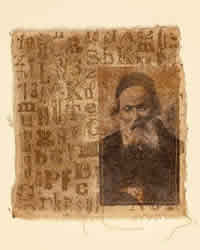
Chofetz Chaim, Robin Atlas, 2012

Chofetz Chaim, Robin Atlas, 2012

Lashon Hara: On the Consequences of Hate Speech is an unusual art exhibition at the Anne Frank Center in lower Manhattan. Hebrew for “evil speech,” Lashon Hara focuses on how words can be used to destroy and are at the root of intolerance, anti-semitism, racism and discrimination.


At the "Lashon Hara" exhibit, Anne Frank Center

At the “Lashon Hara” exhibit, Anne Frank Center

Set within a permanent exhibit on Anne Frank, Lashon Hara features a collection of mixed media works, by textile artist Robin Atlas . “It is intended to stimulate awareness of the impact of our words. It is my hope that from that, diverse factions become the whole and a common good evolves,” says Atlas. Each piece references an aspect of Jewish law about “evil speech,” or a tale from Jewish folklore. I wish the lighting had been better because the pieces were each very beautiful but they were hard to see. The exhibition, presented in conjunction with the Jewish Art Salon, will be on view through February 27th.

Chelsea Galleries, Instead of Museums, Christmas Week

If you live in New York, then I’d recommend avoiding the major museums during Christmas week. They will be very crowded with holiday visitors, making art viewing a real challenge. Instead, use the week to go visit some Chelsea galleries. There are some great shows on and these spaces won’t be jam-packed. Here are some suggestions:

“Jacqueline with flowers,” Pablo Picasso

Picasso & Jacqueline: The Evolution of Style – featuring nearly 140 works by Pablo Picasso. These were created during the last two decades of his life while living with Jacqueline Roque; first his “muse,” and eventually his wife.  Pace  Gallery 534 West 25th Street, through January 10, 2015.

Picasso & the Camera - Curated by John Richardson

“Picasso & the Camera”

Picasso & The Camera  – explores Picasso’s  use of photography as both an inspiration and as an integral part of his studio practice. Spanning sixty years, the show includes many photographs taken by Picasso but never before seen or published. The Gagosian Gallery, 522 West 21st through January 3, 2015.

kalman

Maira Kalman

Maira Kalman, My Favorite Things – selected gouache paintings in conjunction with her curated show Maira Selects, an inaugural exhibition at the newly renovated Cooper Hewitt, Smithsonian Design Museum. Julie Saul Gallery 535 West 22nd Street., through February 7, 2015.

Robert Motherwell

Robert Motherwell: Works on Paper 1951- 1991 – exploring four decades of the artist’s work in collages, drawings, and paintings.  Paul Kasmin Gallery, 515 West 27th Street through January 3, 2015.

Chameleon_Camoflage

Diana Copperwhite

“Shadowland,” Diana Copperwhite – abstract paintings by this Irish painter on view at 532 Gallery Thomas Jaeckel, 532 West 25th Street, through January 10, 2015.

Mikkel Carl, untitled

“On the Benefits of Delayed Gratification” –  group exhibition with artists Mikkel Carl, Steven Cox, and Russell Tyler. At the Ana Cristea Gallery, 521 West 26th Street through January 31, 2015.

image

Julio Alan Lepez

Portraits Kit –  Colorful portraits and self-portraits in different mediums, by Argentinian artist Julio Alan Lepez. At the Artemisa Gallery, 530 West 25th, through January 27, 2015.

Gallery List

Gagosian Gallery 522 West 21st

Julie Saul Gallery 535 West 22nd

Artemisa Gallery 530 West 25th

532 Gallery 532 West 25th

Pace Gallery 534 West 25th

Ana Cristea Gallery 521 West 26th

Paul Kasmin Gallery 515 West 27th

Art Galleries of the Crown Building

crown buildingBuilt in 1921, The Crown Building at 730 Fifth Avenue was originally called the Hecksher Building after its developer August Hecksher, a German immigrant who made his wealth from mining operations. Famous for its golden top, the Art Deco tower was once owned by Ferdinand and Imelda Marcos. Today, it’s back on the market for an estimated $1.5-2 billion dollars. Well-known tenants in the building include jewelers Bulgari and Mikimoto; the Spitzer family, headed by former Gov. Eliot Spitzer; talent and literary agency ICM; private-equity giants KKR and Apollo Global Management; and men’s designer Ermenegildo Zegna.

I think what makes this building interesting is the number of art galleries one can find throughout its floors. In some ways this isn’t surprising because it’s in this building that the Museum of Modern Art got its start in 1929.

I went to 730 Fifth to see Andrew Wyeth: Seven Decades at the Adelson Galleries (7th floor) and Still Lifes: Reflections of American Culture at D. Wigmore Fine Art, Inc. (6th floor)

I was drawn to the Wyeth show after seeing Andrew Wyeth: Looking Out, Looking In, which recently closed, at the National Gallery of Art in DC. While the NGA exhibition focused on Wyeth’s window executions, primarily in watercolor and pencil; the ones here represent a range of subject matter for which Wyeth became internationally known: the male and female figure, landscape in all weather conditions, local architecture, and the flora and fauna that inhabited his two favorite places: Chadds Ford, Pennsylvania and the coast of Maine. I enjoyed the DC exhibit more for Wyeth’s ability to catch hauntingly beautiful moments in time. But the Adelson exhibit provided a compelling counterpoint. The show will be there until December 20th.

This slideshow requires JavaScript.

Still Lifes: Reflections of American Culture uses still life painting to demonstrate “the evolution of modernism in America after the 1913 Armory Show,” according to the gallery. Significantly, it was through the 1913 Armory Show that many American painters were first exposed to Cubism, and you can see that influence in many of the paintings on display. I was familiar with some of the artists, like  Max Weber, but there were many others whose work I had not seen before. The paintings are organized thematically — fruit, flowers, abstract objects —  and underscore how simple things can be so widely interpreted. There’s a wonderful essay about the exhibition on the gallery’s website, and available at the show, which is on view until January 31st.

This slideshow requires JavaScript.

Other galleries worth visiting in the Crown Building are: The Benrimon Gallery (7th floor) which has an exhibition of works by Roy Lichtenstein; the Forum Gallery (2nd floor) which has a new exhibit opening December 12th of watercolors by David Levine; and the Nohra Haime gallery (7th floor) showing works by Julie Hedrick that are focused on “Alchemy,” and it’s relation to gold.

Check at the lobby desk for a complete list of the galleries found in the building and uncover your own New York art find.

Wearable Art From Multiple Cultures


This slideshow requires JavaScript.

Exhibits at three different museums showcase wearable art from diverse cultures and demonstrate that there’s more to jewelry than simply adornment.


"Holocaust" neck piece, Joyce J. Scott (2013)

“Holocaust” neck piece, Joyce J. Scott (2013)

Neckpieces and blown glass sculptures by Joyce J. Scott is the focus of a thought-provoking exhibit at the Museum of Art and Design (MAD). Entitled “Maryland to Murano,” the exhibition is the first “to examine the relationship between Scott’s beaded and constructed neck pieces created in her Baltimore, Maryland studio and her more recent blown glass sculptures crafted in the Brenego Studio on Murano Island in Venice, Italy,” according to MAD. The exhibit is on view through March 15, 2015.

Bracelet, Raymond C. Yazzie, 2005. Silver inlaid with coral, turquoise, lapis lazuli, 14-karat gold accents.

Glittering World: Navajo Jewlery of the Yazzie Family features almost 300 examples of contemporary jewelry made by members of one Gallup, New Mexico family.  The works on view at the National Museum of the American Indian are silver, gold, and stone inlay work,  combining bead and stonework as well as silver and gold.  The exhibition, states the museum, “places Navajo jewelry making within its historical context of art and commerce, illustrates its development as a form of cultural expression, and explores the meanings behind its symbolism.” The exhibit is on view through January 2016.

Pair of Anklets, Gold, set with white sapphires, with attached pearls and hanging glass beads; enamel on reverse (1800–50), Al-Thani collection

Pair of Gold Anklets (1800–50), Al-Thani collection

Finally, at the Metropolitan Museum of Art, is  Treasures from India: Jewels from the Al-Thani Collection. Though a smaller exhibit, the sixty items on display here showcase the intricate and colorful styles of the jeweled arts in India from the Mughal period until the present day. They all come from the private collection formed by Sheikh Hamad bin Abdullah Al-Thani. The exhibit will be open until January 25, 2015.

El Anatsui

This slideshow requires JavaScript.

My first encounter with Ghanan born artist, El Anatsui, was the 30 piece exhibition of his work at the Brooklyn Museum of Art, held in 2013. Since then, I’ve discovered pieces by this globally-renowned contemporary artist at both the Met and the MOMA. Now there’s a new opportunity to view Anatsui’s work in a more intimate environment at the Mnuchin Gallery on East 78th Street.

This slideshow requires JavaScript.

Anatsui converts everyday materials, like aluminum and and copper wiring, into dramatic art .His pieces are influenced by traditions from his birth country, Ghana and his home in Nsukka, Nigeria. From afar Anatsui’s pieces look like textured paintings, but when examined closely, you can see his intricate handiwork in the carefully stitched together liquor bottle caps and labels.

El Anatsui, Detail from Anthem For A-Nu, 2014

El Anatsui, Detail from Anthem For A-Nu, 2014

The show at the Mnuchin Gallery is entitled, “Metas,”  In this entirely new body of work, notes the gallery, Anatsui replaces his characteristic bright colors and patterns with “dramatic cut-outs, dynamic diagonal lines, and geometric shapes demarcated by rich variances in surface textures.”

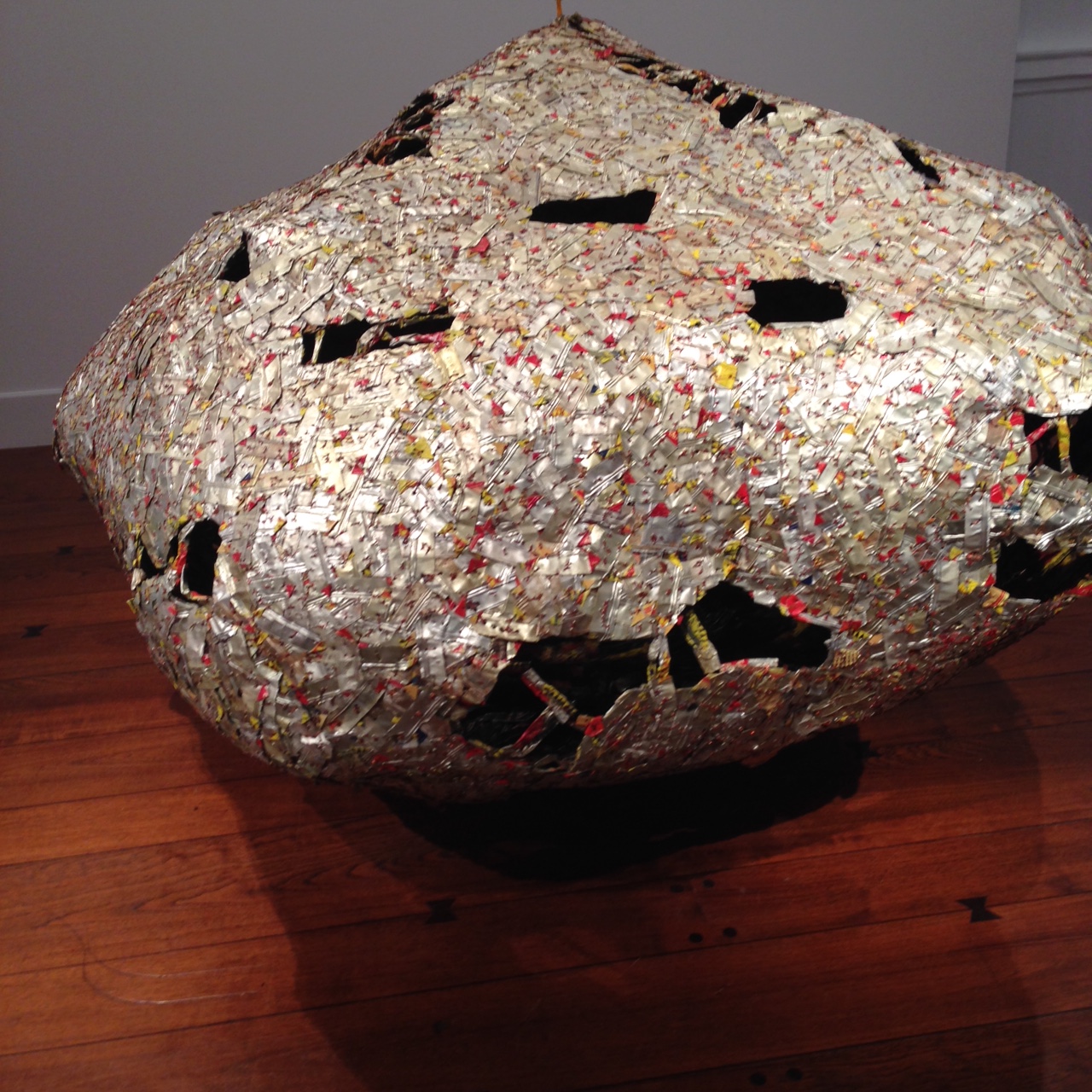
El Anatsui, Womb of Time, 2014

El Anatsui, Womb of Time, 2014

One of my favorite pieces of this show was a sculpture entitled, “Womb of Time.” Suspended from the ceiling, the piece can be experienced both from the outside and inside. Though it probably weighs quite a lot, the sculpture seems light and airy like an eggshell.

El Anatsui: Metas will be on view until December 13th.